
Keeping it moving
me and my decisions, everyday companion


Earlier this month I met with my Anderson Ranch painting cohort which was our first gathering since this summer. Everyone had forty minutes to share images of their work and get feedback from the group, and I gotta say, we covered a lot of ground in that short-ish amount of time. As in, people had a lot of time to tell me things about my work that I now play as sound bytes in my head.
As someone who often rejects workplace feedback (I’ve been told to speak more in meetings to project confidence more times than I can count and I just…can’t), it’s been an interesting shift to take in feedback with more earnestness and openness. I’m curious how people see and experience my work and know, without a doubt, that I need it to help me become the painter I want to be. Before this summer, I was, for the most part, floundering alone in my home studio trying to figure out what wasn’t working. I knew that my paintings weren’t what I wanted them to be, but I had no idea how or what to change.
Now, I’m working at the opposite end of the spectrum where I have an abundance of input and ideas, and I have to decide what feedback I take or which observations from others ring true to me. Jen asked me recently what I liked about my work and what I thought it was about, and my honest response was that I’m so consumed by my paintings right now that I don’t know. I’m asking myself questions about color, composition, scale, interiors vs. exteriors, and I’m still not sure of any of it. I’m trying little bits and pieces at a time, sometimes all at once. I’m increasing scale, limiting my palette, trying acrylics, refocusing on the bathers, simplifying my figures, considering narrative, asking myself who are these figures…there’s a very long list of things to be consumed by.
But one thing that I’ve stuck with is that I want to paint the figure. A lot of the feedback from my Anderson Ranch group was about how my spaces are dynamic and inviting while my figures are stagnant, emotionally void, and function only as scale markers. I’m dramatizing for the bit, but there was a some consensus that my paintings didn’t need the figures; they could be complete and complex paintings without them.
It’s not surprising to me that my figures are more of a work in progress. My paintings have always leaned towards abstraction, and I’ve never painted the figure outside of model sessions. In college, I really wanted to incorporate figures into my work, but my initial attempts were bad, and I didn’t stick with it long enough to find a way to make them work.
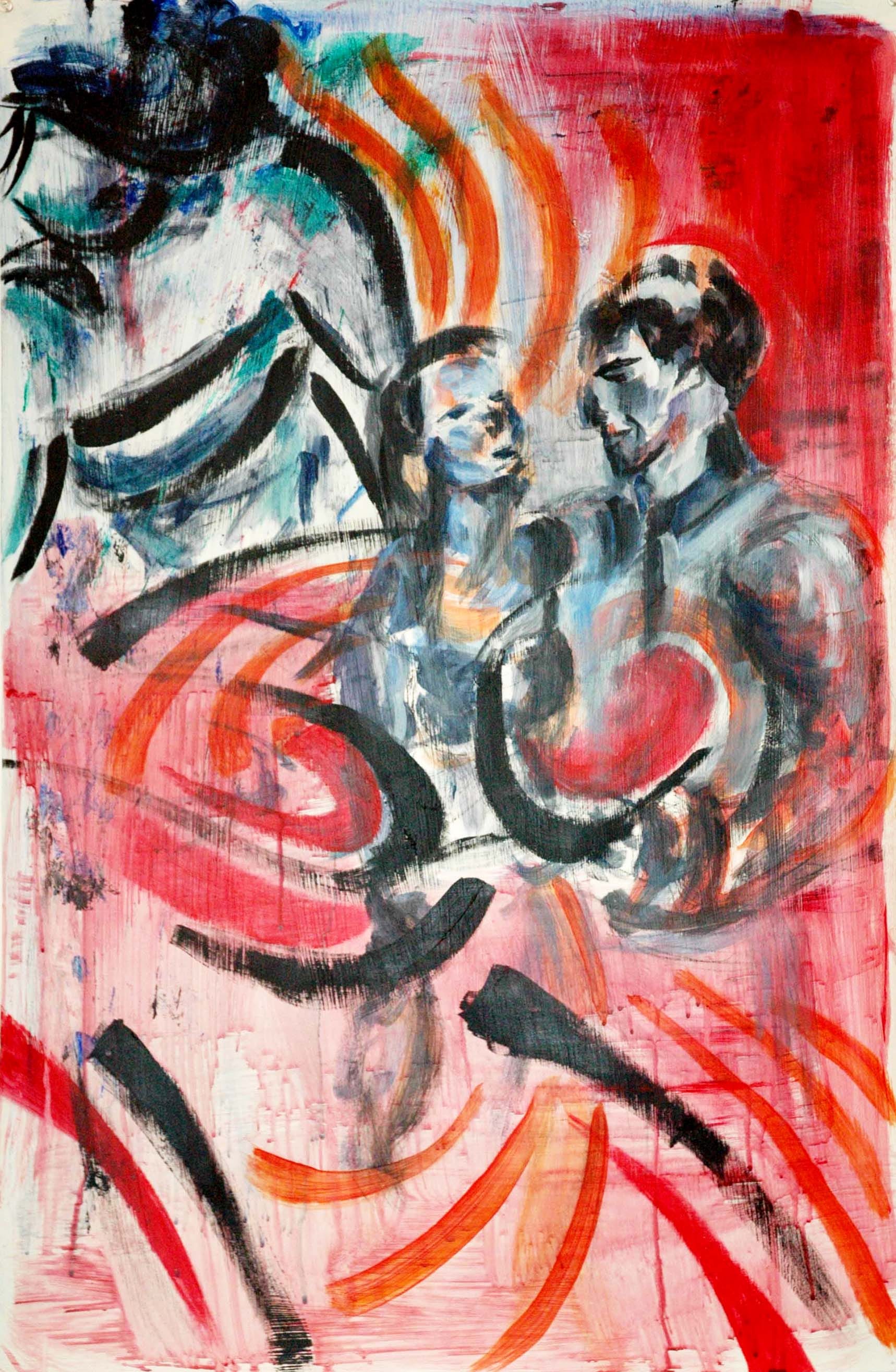
Looking at this painting now, I don’t think it’s all bad. There are some areas I quite like, and it feel like a painting by a 20 year old (in a good way!); there’s a youthfulness to it. Regardless of how I felt and feel about this painting, painting the figure has never come naturally to me unlike painting abstractions. In 2012, I believed real artists were fueled by natural talent, so the logical conclusion was I should stick to purely abstract painting since since painting the figure was unnatural to me. It was hard, awkward, and clunky. I know, I know! I was dumb. My logic was dumb. We can all agree!
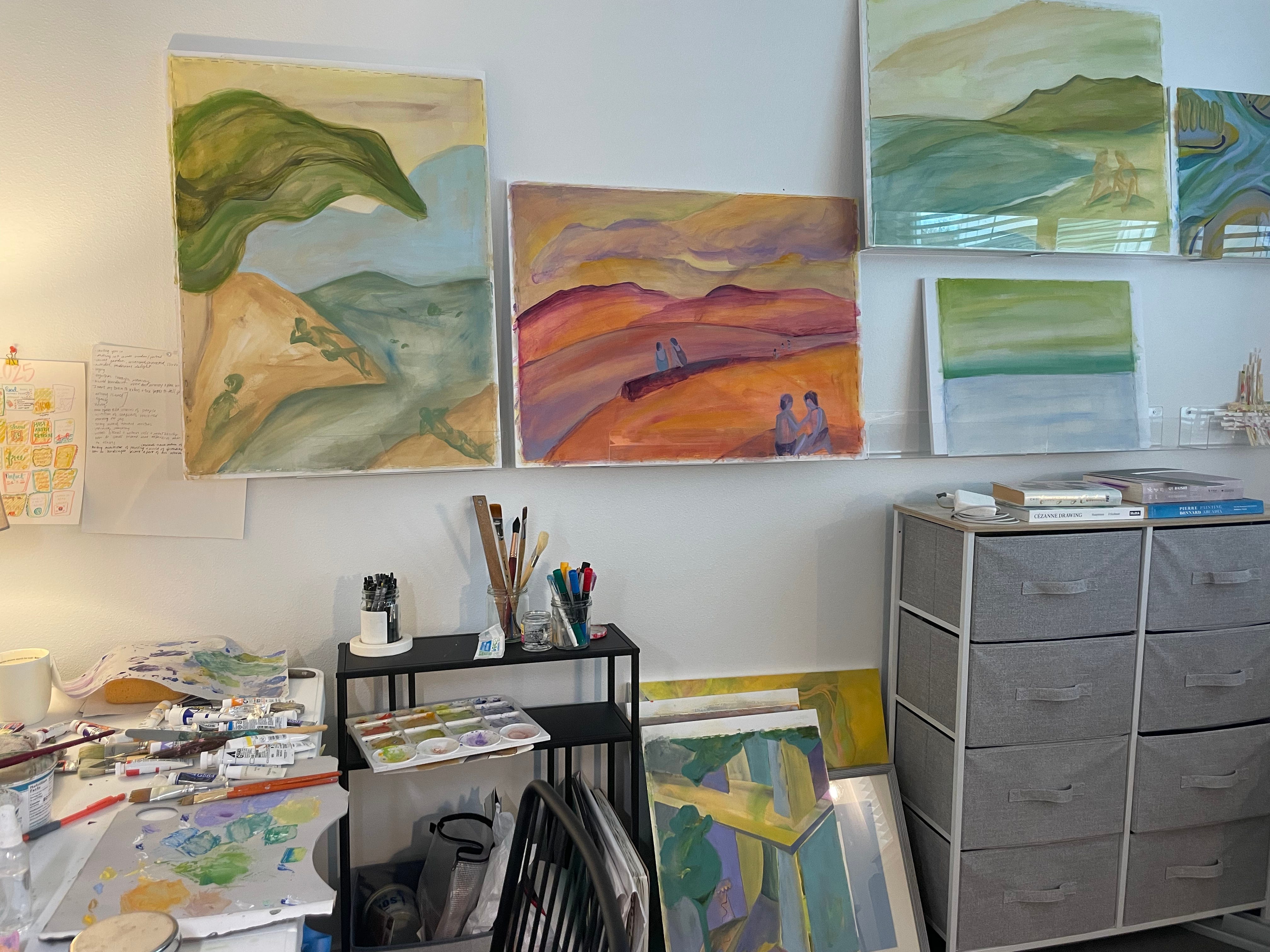
I wrote recently about building confidence in my work and myself as an artist, and this is a moment where I’m putting my newfound confidence into action. My figures may be duds today, but one day they won’t be! This time, I’m sticking with it.
My mom tells me that my disposition for agitation and rage is the cause of my grey hair, but my agitation about my not-quite-there-yet paintings is what fuels me to keep going, for better or worse. I want to paint the figure! It’s the one thing I know for sure about my work and where it’s going. If my figures start feeling and looking more alive in my paintings, I think the grey hair is worth it. How could it not be? In fact, I welcome it. :)
Until next time,
Alison